CHAPTER 02 · Chapter dossier
Dark Angels
Shock and awe. Then silence.
Dossier summary
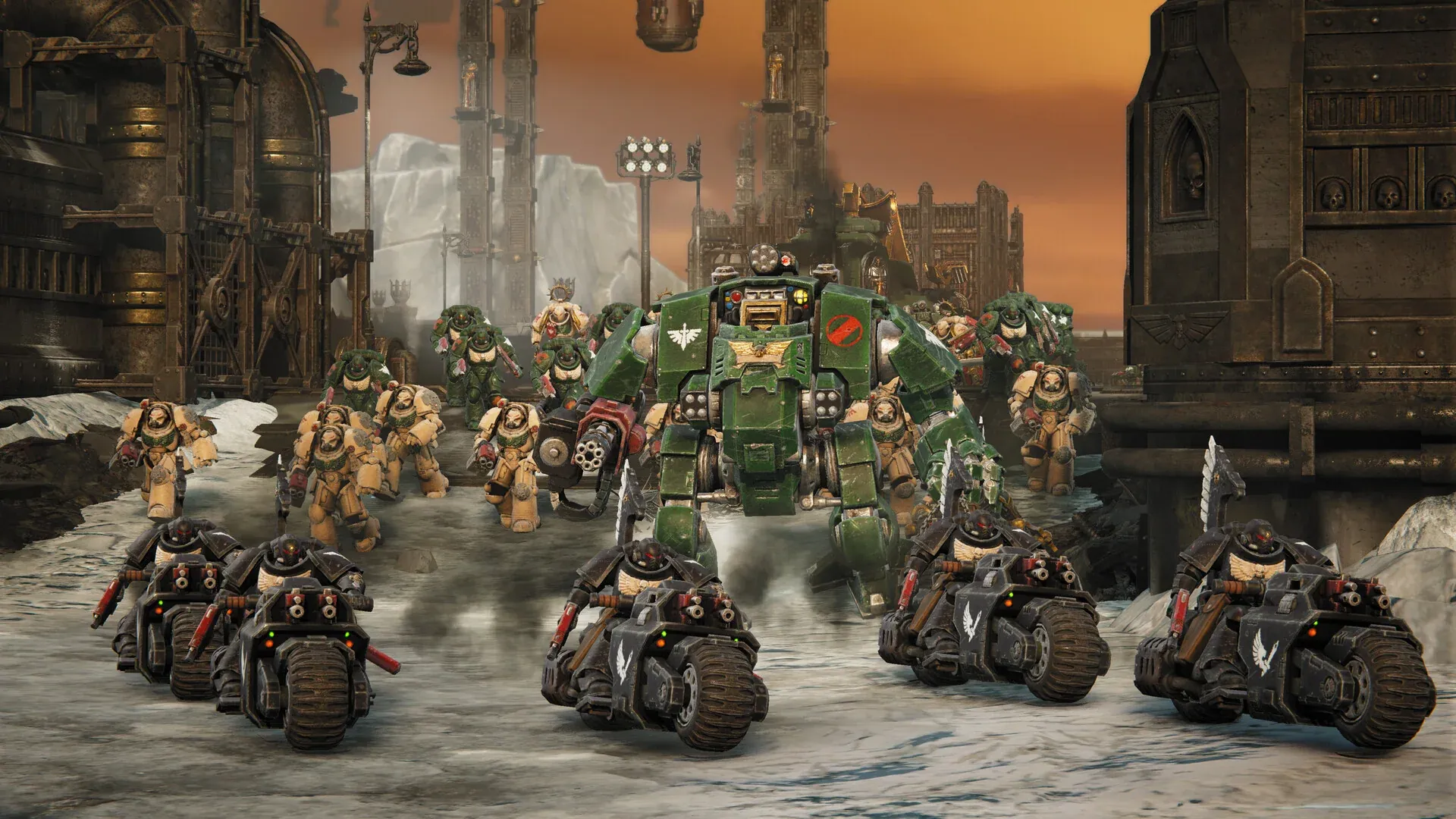
The reinforcement Chapter. The Dark Angels bring the Deathwing’s Terminator wall and the Ravenwing’s bike strikes, plus a Primarch at the climax of the Space Marines campaign.
Identity
- A powerful, independent Chapter and a playable Space Marines sub-faction in Dawn of War IV.
- Company Master Astoran leads the Deathwing in Terminator armour; Chaplain Ezrael rides with the Ravenwing.
- Deathwing units are slow but punishing; Ravenwing units trade durability for speed and hit-and-run pressure.
- Lion El’Jonson, Primarch of the Dark Angels, is playable at the climax of the Space Marines campaign.
How to play Dark Angels
- 01
Choose the Dark Angels when you want a heavier, more deliberate Space Marines army.
- 02
Anchor the frontline with Astoran and the Deathwing, then use Ezrael and the Ravenwing to hit exposed positions.
- 03
Do not spread the Deathwing thin; their value is in the grind, not the chase.
How to play against Dark Angels
- 01
Force the Dark Angels to split the slow Deathwing from the fast Ravenwing.
- 02
Deny Power and punish expensive reinforcements.
- 03
Avoid head-on fights with the Deathwing unless you can bring anti-armour and numbers.
Campaign role
The Dark Angels answer the Blood Ravens’ call for aid and become a second playable Space Marines perspective in the campaign. Their arrival gives the player a strategic choice between the two Chapters.
- The player can choose between the Blood Ravens’ flexible combat style and the Dark Angels’ shock-and-awe approach.
- Astoran’s Deathwing dismantles heavy units with power fists; Ezrael’s Ravenwing delivers lightning strikes on bikes.
- Lion El’Jonson enters the conflict personally at the campaign climax and is playable.
- This is the first time the Dark Angels have been playable in a Dawn of War game.
Signature mechanics
Deathwing Terminators
Ravenwing bike formations
Heavy frontline and hit-and-run pairing
Lion El’Jonson at the campaign climax
Unit file
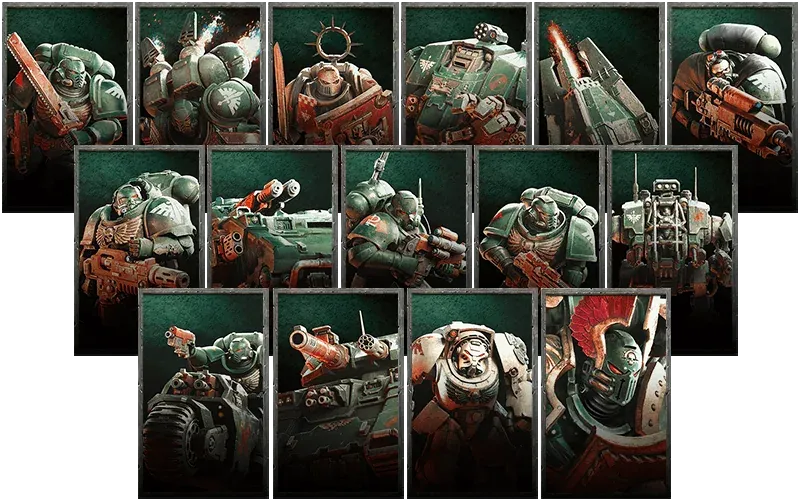
The official faction preview panel shows 15 unit cards for the Space Marines, Orks and Necrons, and 14 for the Adeptus Mechanicus. The unit names below are identified from those panels and named preview coverage. Stats, costs and abilities have not been released, so the table records role only.
| Unit | Role | Type |
|---|---|---|
| Assault Intercessors | Melee infantry | Infantry |
| Assault Intercessors with Jump Packs | Jump infantry | Infantry |
| Bladeguard Veterans | Elite melee infantry | Infantry |
| Drop Pod | Orbital deployment | Deployment |
| Eliminators | Sniper infantry | Infantry |
| Eradicators | Anti-armour infantry | Infantry |
| Gladiator Reaper | Anti-infantry tank | Vehicle |
| Infiltrators | Light infantry / jamming | Infantry |
| Intercessors | Ranged infantry | Infantry |
| Invictor Tactical Warsuit | Recon walker | Walker |
| Outriders | Fast bike assault | Infantry |
| Redemptor Dreadnought | Heavy war-walker | Walker |
| Repulsor Executioner | Heavy tank | Vehicle |
| Terminators | Elite infantry | Infantry |
Scroll table horizontally on mobile →
Sources & verification
4 records- Official Official Game Overview Trailer
Official claims are checked against publisher, developer or store material. Press claims are attributed. Community material is used only for legacy context or where it corroborates a primary source. See the full source register and editorial policy.